Thursday, April 27, 2023
The Very Narrow World of an Oregonian; Maurice Goldfoot
Nadene Goldfoot

I say the very narrow world of my father, Moses/Morris/Maurice Goldfoot is because he was born on July1, 1908 at 277 Baker Street in South Portland and died in 1967. His father died from an accident involving his horse and wagon when he was 4 years old and his brother, Charlie, was 6. They sold newspapers on the street and were able to make change. My father, the smaller and lighter haired trailing behind his brother got the most business, he told us. Then they'd come home and give the change to their mother. Sometimes they managed to go to the movies. Their mother, my Bubby, was so short she was almost midget-size, and only spoke Yiddish, completely illiterate from Lithuania as both parents were.
As a child, he went to movies. Motion pictures debuted in Oregon in 1894 when a kinetoscope arrived in Portland. The innovative technology allowed boxing matches, vaudeville acts, and other popular entertainment to be shown in penny arcades and peepshows and, after 1906, on the nickelodeon.
Soon early films were being projected in theaters, first at Cordray’s Opera House in Portland. By 1897, local documentary films were being made, including Fishing on the Willamette (1897), The Portland Fire Department (1901), Decoration Day Parade (1902), Panoramic View of the Columbia (1904), and Opening Ceremonies of the Lewis & Clark Exposition Grounds (1905). One of the first feature films made in the state was The Fisherman's Bride, a 1908 silent film produced by Col. He picked up English when he started school.
He lived in a day consisting of the radio. Just before he died in 67, we had TV in the house by 1953. One of Portland's first radio station licenses was granted to The Portland Telegram and the first broadcast was heard on November 21, 1921 from the Telegram's offices in the Pittock Block. By his teens at 13, the year would have been 1921, so he may have had radio by then. "The Sheik of Araby" w. Harry B. Smith & Francis Wheeler m. Ted Snyder was popular.

I remember sitting around our radio in the living room in Portland's Ladd's Addition and listening to Lux Theater. Lux Radio Theatre, sometimes spelled Lux Radio Theater, a classic radio anthology series, was broadcast on the NBC Blue Network (1934–35) (owned by the National Broadcasting Company, later predecessor of American Broadcasting Company [ABC] in 1943–1945); CBS Radio network (Columbia Broadcasting System) (1935–54), and NBC Radio (1954–55).

Dad went in for all the sports; running, and loved baseball. He had to quit high school before he started his senior year to help support the family of his mother, brother and two sisters. He hated giving up baseball but could weigh the more needed skill that he had-working-against enjoying something.

Mel Blanc, both born in 1908, a month older
I presume my father listened much earlier, and also in his many trucks. He went to Failing Grade School in SW Portland with Mel Blank .Melvin Jerome Blanc (born Blank May 30, 1908 – July 10, 1989) was an American voice actor and radio personality whose career spanned over 60 years. During the Golden Age of Radio, he provided character voices and vocal sound effects for comedy radio programs, including those of Jack Benny, Abbott and Costello, Burns and Allen, The Great Gildersleeve, Judy Canova, and his own short-lived sitcom.

Blanc was born on May 30, 1908 in San Francisco, California, to Eva (née Katz), a Lithuanian Jewish immigrant, and Frederick Blank (born in New York to German Jewish parents), the younger of two children. He grew up in San Francisco's Western Addition neighborhood, and later in Portland, Oregon, where he attended Lincoln High School. He had an early fondness for voices and dialect, which he began practicing at the age of 10. He claimed that he changed the spelling of his name when he was 16, from Blank to Blanc, because a teacher told him that he would amount to nothing and be like his name, a "blank". He joined the Order of DeMolay as a young man, and was eventually inducted into its Hall of Fame. After graduating from high school in 1927, he divided his time between leading an orchestra, becoming the youngest conductor in the country at the age of 19; and performing shtick in vaudeville shows around Washington, Oregon and northern California.

The Neighborhood House was right around the corner and that's where he started boxing, and went into it there professionally. He said that if the opposition looked really tough, he'd lay down rather than be beaten to a pulp. He had boxes of his gloves in our basement.
At about that time he tried marriage with a Rose Zusman, but that was over about as soon as it started, marrying June 3, 1928 when he was 19 and divorced August 12, 1929 at 20. He worked for the kosher butcher on 3rd and Lincoln where the Lincoln Theater resided a few doors away.
.jpg%20Maurice%20and%20Mildred.jpg)
Then he met my tall mother, Mildred Elizabeth Robinson and married on April 29, 1932, bringing her home to his mother who they lived with for a few months. Mom learned how to make a lot of Jewish dishes that Bubby was known for. He was still with the kosher butcher when I was born in 1934. His minimum wage was $0.40 per hour. He got so he gave my mom $15 per week for groceries. That's what he paid me per week when I was 16 and could drive myself to work. I'd do his books after school.


Out of 24 hours, he worked 8 here at the shipyards, then the rest in his own business, buying cattle, selling hides to the government, meat to people. He must have slept very little; never went to synagogue, unfortunately; trying to provide security for his family that he never had.


I loved it when he did get together with his sisters in Portland. They'd speak Yiddish and laugh and laugh. Elsie had one son, Donnie. I wonder if they mentioned how Bubby used to use the broom when they were under the bed to reach them. She was outnumbered 4:1. To provide for them, she had been a chicken plucker.
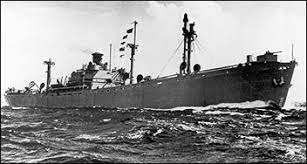
By 1941 we were at war, the 2nd World War. Dad was exempt from the draft as he was in a business of buying hides by then with the beginnings of his own wholesale Meat Co.; leather for army boots. So he, who never hammered a nail, became the manager at the ship yards of a group of workers. With his own business of Lincoln Wholesale Meats, he had butchers working for him; and my little cousin, Don, who finally was able to drive one of his trucks for him after school.


Dad never took a vacation but probably enjoyed the auction houses he drove to across Oregon in buying cattle more than he would any vacation. A Jewish guy wearing jeans and flannel shirts and cowboy boots must have been quite a sight, sort of a Mel Brooks in "Blazing Saddles,"

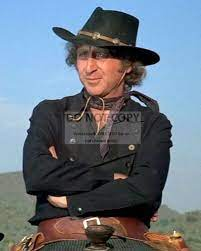
Dad made it big, but no hat; but wore the boots. You walk around horse manure in cattle auctions, you know. He wound up on Columbia Blvd next door to Swift and Armour with his new business of Silver Falls Meat Packing Co. Though I had been keeping his books for him single-handed since age 15; when he moved in there, he hired professionals with machines. I lost my job! The best I did was enter college, and finally one day, while teaching at Lindbergh Grade School in Ontario, Oregon, got the school camera and made a study of cow to table...went through Silver Falls taking pictures and telling the story of meat.

6 hr 20 min (375.4 mi) via I-84 E driving....Portland to Ontario
When he came home from the road, being gone all week, he'd watch TV. Life was all work and no play; no reading great books or any book for that matter; only magazines.
Dad died on July 23, 1967, flown into Portland from Ontario to the Portland hospital. His illness happened right after Israel's 6 Day War (June 5th to June 10th 1967) He had become ill and died in about 3 weeks at age 59. He probably didn't even follow the war, nor know about any of them as they didn't make the Portland papers. What was in his life was the price of cattle, and what his children were doing. He was so lucky that our mom was the kind who liked her freedom but also felt and needed that security he provided. She and I had a good time together.
Dad died after being in the St. Vincent's hospital in Portland for four days. He was only 59 years old. He died at 11:00pm. He's buried in the Shaarie Torah Cemetery in Portland, Oregon. They spelled his mother's name as Hattie Germankoski on the death certificate.
He had hepatitis. He had had a blood transfusion after surgery. He had gone into shock. They used hypnosis to bring him out. The prostrate was operated on and was swelling. It was hyperplasic.
Since then, I've heard from business men who were helped and got their start in business from my father. That's a very Jewish mitzvah. He helped many.
He died in St. Vincent's Hospital in Portland and so did his father, most likely different buildings between the old hospital and the new one.
Labels: baseball, Billy Meshke, boxing, butcher, meat packer, Mel Blanc, new immigrants, Ontario, Oregon, Oregon shipyards, Portland


Friday, January 27, 2023
Eighty-Nine Years of Anti-Semitism During My Lifetime
Nadene Goldfoot


My family had moved to SE Portland of Ladds Addition that consisted of a mixed population of 3 Jewish families of Padrow and Robinson and Bricker and us; Swedish, several Chinese, Irish, and Italians and others. Our school potlucks were a marvelous feast of around the world foods. When I was born, my father worked in South Portland where he was born, in the kosher butcher shop on Lincoln Street.

Later on, he had his own business of Lincoln Wholesale Meats, and after that he had grown into Silver Falls Meat Packing Co. I don't think anyone cared that he was like the Jewish Cowboy with jeans down to his hips way back then, and even wore cowboy boots. He was a great cattle-buyer and truck driver. Being Jewish was not an issue that I ever heard about.


86 years, hiking in April 2021 in Gresham, Oregon
The problem of anti-Semitism and my life synchronize. From 1933 on, life in Germany for the Jewish people had changed dramatically. It was the start of a government sponsoring anti-Semitism as Hitler was coming into power. I was born in 1934 and fortunately for me, in the United States. So here I am in January 2023 and still am alive!
I still am witnessing anti-Semitism in the world, and it's been 89 years since it started in 1933, that is governmental sponsored anti-Semitism.
In their 25-point party program published in 1920, Nazi Party members publicly declared their intention to segregate Jews from “Aryan” society and to abrogate their political, legal, and civil rights.
Nazi leaders began to make good on their pledge to persecute German Jews soon after their assumption of power. During the first six years of Hitler's dictatorship, from 1933 until the outbreak of war in 1939, Jews felt the effects of more than 400 decrees and regulations that restricted all aspects of their public and private lives. Many of these were national laws that had been issued by the German administration and affected all Jews. But state, regional, and municipal officials, acting on their own initiatives, also issued many exclusionary decrees in their own communities. Thus, hundreds of individuals in all levels of government throughout the country were involved in the persecution of Jews as they conceived, discussed, drafted, adopted, enforced, and supported anti-Jewish legislation. No corner of Germany was left untouched.
Then Nazi Germany entered Poland on September 1, 1939 and their hatred and jealousy of and for Jews spread throughout the world. WWII had started.
To justify the action, Nazi propagandists accused Poland of persecuting ethnic Germans living in Poland. They also falsely claimed that Poland was planning, with its allies Great Britain and France, to encircle and dismember Germany.
According to their logic, they, who were persecuting Jews living in Germany, should have had the world to invade Germany to free the Jews. Ha! No one came to the Jews' aid, not even the United States. They were dealing with their own anti-Semitism at that time. No Jews allowed into many athletic clubs; the telephone company of NY not hiring Jewish women, These are things that happened to my friends.

In the first half of the 20th century, Jews were discriminated against in employment, access to residential and resort areas, membership in clubs and organizations, and in tightened quotas on Jewish enrollment and teaching positions in colleges and universities. Restaurants, hotels and other establishments that barred Jews from entry were called "restricted". As to stores, they started their own. That's how Meir & Franks
developed.

friend, Sam Arnstein, on left, at one of our formal dances.
My Jewish peers and I were not asked to join any sororities or
fraternities in high school or college so we had our own. Actually, we had a great time and
had formal dances at wonderful places. I remember sitting in
the cafeteria of
high school and the other students were talking about those
terrible Jews. I mentioned that I was Jewish, and were they
ever surprised!
That was it; I embarrassed them. It felt good.
Jews encountered resistance when they tried to move into white-collar and professional positions. Banking, insurance, public utilities, medical schools, hospitals, large law firms and faculty positions, restricted the entrance of Jews. This era of "polite" Judeophobia through social discrimination, underwent an ideological escalation in the 1930s. Many Jewish students were turned away from Medical school as they had quotas, and we had so many bright and eager Jews that missed out becoming doctors, something my father would have loved to be able to do, but he was one of the poor Jews. He went on to be the designer and owner of his own meat packing company, and he knew a lot, so much, about anatomy.
My family and I living on the West Coast weren't harmed, but throughout the world, other Jews were losing their lives.
Portland had 8,000 Jews in the 1920s. Today, Portland is home to more than 40,000 Jewish residents, and Jewish history in Oregon goes back to 1849. Many Jewish residents helped shape Portland’s future, such as Bernard Goldsmith, the mayor of Portland from 1869-1871, who built the Willamette Falls Locks in Oregon City; Aaron and Jeanette Meier and Emil Frank, of the Meier & Frank department stores; “Soda Pop King” Louis Albert; and Sam Schnitzer of Schnitzer Steel, to name just a few.
TABLE B (CONTINUED) Jewish Jewish City Population City Population Kansas City, Mo 12,000 Reading, Pa 1,750 Butte, Mont 1,000 Scranton, Pa 7,500 Omaha, Neb 10.000 Providence, R. 1 15,000 Camden, N. J 2,000 Memphis, Tenn 7,000 Jersey City, N. J. 12,500 Nashville, Tenn 3,000 Paterson, N. J 15,000 Dallas, Tex 8,000 Trenton, N. J 7,000 Fort Worth, Tex 2,250 Albany, N. Y 7,000 Houston, Tex 5,000 Buffalo, N. Y 20,000 San Antonio, Tex 3,000 Rochester, N. Y 20,000 Salt Lake City, Utah... 2,500 Syracuse, N. Y 12,000 Richmond, Va 4,000 Akron, 0 2,000 Seattle, Wash 5,000 Cincinnati, 0 25,000 Spokane, Wash 1,100 Columbus, 0 9,000 Tacoma, Wash 900 Dayton, 0 4,000 Milwaukee, Wis 20,000 Toledo, 0 7,500 Youngstown, 0 5,000 Total 513,000 Portland, Ore 8,000 or about 4.1$ As to cities of the second class, namely, those having a general population of between 50,000 and 100,000, their percentage of Jews averages about three per cent. Generally speaking, with regard to both classes mentioned above, it may here be noted that the proportion of Jewish residents is greater than the mean in the East, and less than the average in the West. The tables given below are peculiarly instructive as exhibiting how the percentage of Jewish residents tends to become gradually lower as the total number of citizens decreases.
Children of Eastern European and Sephardic immigrants who came of age in the 1920s and 1930s remember the neighborhood as insular and nurturing. It was a time of increased antisemitism locally and nationally, and the neighborhood of South Portland and its institutions provided a respite. Beginning in the 1920s and 1930s, and accelerating in the 1940s and 1950s, families moved to more prosperous areas of the city. Still, South Portland remained a Jewish institutional hub, with ethnic shops, the Portland Hebrew School, the Jewish Home for the Aged, Neighborhood House, the B’nai B’rith Building (later the Jewish Community Center), and all but two of the city’s congregations.
Anti-Semitism makes fun of to the point of cruelty of being Jewish. It states that Jews are stupid when our IQs say otherwise.
.jpg%20flag%20of%20Israel.jpg)
Many of our Jews could be classified as "star" people, and we are the Star of David people, a group talked about of immense talent in many fields on the internet today. The author implies that they may have come from the stars. Well, our people did come as aliens from other countries but not from the stars. For us it was good genes; good families that believed in education. Native Americans, Chinese, etc all have found star people among themselves.
Resource:
https://encyclopedia.ushmm.org/content/en/article/antisemitic-legislation-1933-1939
https://www.census.gov/history/pdf/jewishpop-ajc.pdf
https://en.wikipedia.org/wiki/History_of_antisemitism_in_the_United_States
https://encyclopedia.ushmm.org/content/en/article/invasion-of-poland-fall-1939#:~:text=On%20September%201%2C%201939%2C%20Germany,to%20encircle%20and%20dismember%20Germany.
https://www.oregonencyclopedia.org/articles/jews-in-oregon/
https://en.wikipedia.org/wiki/Star_people_(New_Age_belief)
Labels: anti-Semitism, Jewish population, Oregon, Portland, WWII
Sunday, November 06, 2022
Life Among Anti-Semitic Lithuania for Nathan Abraham Goldfus/Goldfoot, My Grandfather
Nadene Goldfoot

Today, Lithuania is still showing signs of being anti-Semitic. Our line of Goldfus connected with Grant Gochin of South Africa whose Faive Shrago Gochin married our Tsipora Goldfus in 1857 in Papile, Siauliai, Kuanas, Lithuania. Papile and Telsiai are 51.8 km apart or 32.1 miles. Grant, like me, writes a lot about Lithuania and anti-Semitism. He has also published a book about it. He has been kept from having Lithuanian citizenship due to being Jewish, so he has sued the government.
Amazingly, if you pay enough money, Sephardic Jews who can prove Spanish ancestry, are gaining citizenship in Spain after having the terrible Spanish Inquisition of 1492. Evidently Lithuania can't even go that far.
Interestingly, Grant's profession as financial advisor is the same one that Ian Goldfoot, our found cousin also of South Africa, was in. So Goldfus/foot have been found in Lithuania and I've found relatives in Ukraine as well but no Goldfus/foot there or in Poland. Our Bubbie was very proud of being a Litvak, a person of Lithuania. Sadly for her, she lived on the border and Poland took over Lazdijai where she was from. To her, she was still a Litvak but her records wound up in Poland.


The town of Telsiai is so old that it dates back to the chronicles of a Crusader Order in 1320. In 1495, there were Jews living in Vilna, Grodno and Kovno totaling 10,000. From 1495 up to 1502, Jews were excluded from Lithuania so were expelled. By 1529 they received a charter guaranteeing freedom of movement and employment and soon were monopolizing foreign trade and tax-farming.

Then in 1566 to 1572, the Jewish badge was introduced and Jews were disqualified in courts from giving evidence, always a 2nd class citizen.
Jews entered this town in the 1600s. From 1623 to 1764 the "Va'ad Medinath Lita" was established and the Telz community was a subject of the "Kahal" of the Keidan district. They followed the Kahal or 4 kingdoms. The "four lands" were Greater Poland, Little Poland, Galicia (with Podolia) and Volhynia. The earliest form of the Council was organized in 1514 by Sigismund I the Old and Abraham of Bohemia was put in charge of it.

In 1648 to 1656, 100,000 Jews were murdered in the Chemielnicki massacres next door in Poland and Ukraine. The Khmelnytsky Uprising, also known as the Cossack-Polish War, the Chmielnicki Uprising, the Khmelnytsky massacre or the Khmelnytsky insurrection, was a Cossack rebellion that took place between 1648 and 1657 in the eastern territories of the Polish–Lithuanian Commonwealth, which led to the creation of a Cossack Hetmanate in Ukraine. Under the command of Hetman Bohdan Khmelnytsky, the Zaporozhian Cossacks, allied with the Crimean Tatars and local Ukrainian peasantry, fought against Polish domination and Commonwealth forces. The insurgency was accompanied by mass atrocities committed by Cossacks against the civilian population, especially against the Roman Catholic clergy and the Jews. Why the Jews? They're the scapegoats of every situation. This uprising was led by Chmielnicki (Khmelnitsky) Bogdan (1593-1657) the Cossackleader. 744 communities were wiped out. The Ukrainians regarded Chmielnicki as anational hero.


Then in 1758, Telz Jews suffered from "Blood Libels." A 2nd libel happened in 1827. In both cases,, the "accused" were released by the court, but as a result, the Jewish population suffered through a period of fear. They had realized people were anti-Semitic.
In 1825, the nobles asked the Tsar to expel the Jews because they....spread diseases....and threatened to rob and to steal....lies describing the opposite of what the Jews were like. Actually, what was going on was that plots were told by estate owners who saw the Jews as competitors in producing and selling alcohol. From the records I have found, our great grandfather, Movsha Goldfus (1836-1878) was a distiller, a person or company that manufactures liquor."barrels that the master distiller deems to be of superior quality."
His father, Iosel "Josel" Symka ben Yankel Goldfus (1798-1878) was a 3rd guild merchant.

By 1791, Telz was granted the Magdeburg rights of self rule by King Stanislaw-August. Until the 3rd partition of 1795, Telz was part of the Polish-Lithuanian Kingdom. This was a time when the 3rd division of Poland by the 3 superpowers of Russia, Prussia and Austria had caused Lithuania to become partly Russian and partly Prussian, sort of like Ukraine is today between Ukraine and Russia.
By 1797, 2,500 people were living in Telz and 1,650 of them were Jews. It was a town where 66% of the people were Jewish.
On January 1, 1800 a municipal council was formed in Telz which included 3 Jewish delegates, but by 1804 the Jews were removed from the municipality at the request of the Christian delegates.
-crop.jpg)
Telz fell under Czarist Russian rule in 1802 as part of the Vilna Province (Gubernia) as a district administrative center. Alexander I (Russian: 12 December] 1777 – 1 December [O.S. 19 November] 1825) was Emperor of Russia from 1801, the first King of Congress Poland from 1815, and the Grand Duke of Finland from 1809 to his death.
By 1843 it was part of the Kovno Province.
In 1812, Napoleon's retreating army passed through Telz, leaving their big gun which sat in their park.
In 1831 the town was damaged during the Polish rebellions and damaged again by more rebellions by 1863.
In 1843, there were 25 Jewish artisans in Telz: 14 tailors, 10 shoemakers and 1 watchmaker. Most Jews made their living from commerce, crafts and peddling. There were also artisans from other communities who would wander, coming to Telz. Until WWI, there was a strong organization of Jewish artisans, which helped its members with loans for buying raw materials and tools. There were several who had big businesses of grains and flax and made a good living. There were also several textile merchants who imported merchandise from Germany, one of the being Ya'akov Rabinovitz.

"The Great Yeshivah" was a source of income of many families who supplied living quarters and food for hundreds of its students. It was like being a college town. Many families maintained gardens beside their houses as additional income. In 1875 a group of young rabbis established the Telshe Yeshiva. The success of this yeshiva is related to a famous figure – a rabbi and rosh yeshiva Eliezer Gordon (1841-1910), who became the first Rosh of the yeshiva and adopted the modern methods of teaching: entrance examination system, after which students were divided into separate groups according to their level of knowledge. After his death, the rosh yeshiva became rabbi Yosef Yehudah Leib Bloch, who managed to secure the fame and prestige of this yeshiva.
%20Rabbi%20David%20Oppenheim.jpg)
Rabbi David Oppenheim (1664-1736), chief rabbi of Prague, historical capital of Bohemia 1773. Artist: Balzer, Johann (1738-1799)-nephew of Samuel Oppenheimer, born in Worms, Germany. Kept his huge amount of books in Hanover because of censorship in Prague. Notice the movement of this Ashkenazi family of Oppenheim; from Jerusalem in 70 to Rome to Germany to Bohemia and Czech Republic and on up to Lithuania in 1854....
Zvi Yaakov Oppenheim (Hebrew: צבי יעקב אופנהיים; 1854-1926) was Chief Rabbi of Kelm, Lithuania, and one of the founders of the Telz Yeshiva. We have several DNA matches with Oppenheim with 9 Oppenheim and Oppenheimer matching me as 3rd to 5th cousins on FTDNA. Rabbi Oppenheim was born in 1854 in the small village of Yakubowe (now Jokūbavas, Kretinga district, Lithuania). He showed extraordinary talents from his earliest youth and at age nine could already study a page of Talmud with commentaries on his own. He was an orphan, and his relatives sent him to Trishik, where he studied with the local rabbi and teacher, Rabbi Lev Szpiro, a son of Rabbi Leibele Kovner.
From Trishik he traveled to the study group of Rabbi Yosef Rosin, who was then chief rabbi in Telz. He was already famous in Telz as a great scholar and while he was still a very young man, Rabbi Simcha Zissel Ziv chose him as the head of his modern mussar yeshiva. After several years there, he returned to Telz and taught Talmud to the students in the group in which he himself had once studied.
In 1883, Rabbi Eliezer Gordon relinquished the Kelm rabbinate and after a short period in Slabodka, became the rabbi in Telz. Through Rabbi Gordons's intercession, the twenty-nine-year-old Rabbi Oppenheim became the new Rabbi of Kelm, not to be confused with Chelm which is in Poland.
Rabbi Oppenheim served as the rabbi in Kelm for forty-three years and died on Thursday, February 11 (27 of Shevat), 1926, at 72. He was succeeded as Rabbi of Kelm by his son in law, Rabbi Kalman Beineshovitz.
By 1869, the town suffered a famine that lasted till 1872. This was the time when Nathan was born. The town had a Hebrew newspaper, "HaMagid" from 1872 to 1874 and they published lists of Jews who donated money for hunger victims in other Lithuanian towns.
By 1870, Telz's population was 6,481 which included 4,399 Jews (68% of the population.
In the 1880s, many Jewish families earned their living in Telz while living in the surrounding villages. During the 1880s were persecutions and pogroms against Jews in Ukraine and other places, so the self-confidence of Telz Jews was damaged. They had to undergo conscription into the army for a period of 6 years which was reason enough for the young Jewish men to leave Telz and immigrate to America, Argentina and South Africa. Nathan left sometime for America and a cousin wound up in South Africa that we know of. That's how we found Ian Goldfoot of South Africa who had immigrated to Texas. This wave of immigration lasted till WWI. So, the Jewish population of Telz decreased by 2,854 people.
The record of Jews forced into service in Russia and Poland were terrible. Young boys were taken, and Jews were placed on the front lines, ill prepared. They were fodder for the army. Then they had to serve for many many years if they could live that long. From what we see today, they are pulling the same acts with today's Russian civilians who are running away as fast as they can.
In 1893 there was a cholera epidemic that took many victims, mostly the poor Jews because they were living in overcrowded conditions which caused bad hygiene. The local rabbi, Eliezer Gordon, started the establishment of a committee which collected money from the rich in order to supply the sick with medicines, disinfectants and medical help. Around this time, the Telz Jewish hospital was established.
By 1897 the population dropped to 6,000 of which 3,088 were Jews (51%).
After Nathan left, the town was burned down in 1907 that lasted for 2 days. Wooden houses burnt very fast and that's what they were made of. When they rebuilt, they used bricks instead.
Nathan first went to England from Lithuania. From there he moved to Londonderry, Ireland's port and lived in Dublin, Ireland in or with relatives there of Ian's Goldfoot line. Then he took a ship to Quebec, Canada and somehow wound up in Council, Idaho after that. I found he marrying our grandmother in Boise, Idaho with the worst spelling on a marriage certificate--a wonder that I recognized who it was for. The witnesses gave it away.
Telz Jews suffered both from the rebels and from the Cossacks. Monish "Menashe" Lukniker, Jewish, was accused of helping the rebels and was hanged by the Russian rulers.
When the Telz authorities started to arm the population and to enlist men to fight the rebels, local Jews suggested to the authorities that they should not conscript Jews into the army, as they had no arms and also didn't know how to use them. Instead, they offered to supply the army with steel, leather, gunowder, etc and so the authorities agreed to that and they all signed a document.
Our grandfather, who would have called himself our Zaida, died on July 19, 1912 at about the age of 38-41. He was given a horse and wagon to earn a living by a Jewish Aid group. Jews had been steered away from New York as they already had many Jews there, and he wound up in Council, Idaho-a little mining town in the mountains where he had met the only other available Jewish woman, our grandmother or Bubbie, Zlata "Hattie" Jermulowski/e (1886-1950). She was there with her siblings and had been born in Lazdijai, Suwalki, Lithuania. What a break for my grandfather ! They spoke the same kind of Yiddish and neither were literate in English. They married and had their 1st son, Charles Goldfoot b: 1906. Then the 3 moved to Portland, Oregon where there were Jews and synagogues.
I'm sure that he was afraid of that horse, and had never used a horse before in Lithuania. I know because my mother's father was also in the same business but had a team of 4 horses and a larger wagon and had met Nathan. He was a farmer who had raised horses and was very very familiar with them. His father, Abiathar Smith Robinson, had been from Vermont, then moved to Illinois and he was a newcomer also to Portland. They had had horses and cattle.

Dad's brother Charles born 1906 and Dad in 1908
My father was then born in Portland in 1908. He was 4 years old when Nathan was killed accidently while riding in his horse and wagon because the horse was spooked by a sound, maybe a honk, and Nathan was thrown out, hit his head, and never woke up. All this happened on a Friday. His wife, pregnant with my Aunt Anne, was frantic, knowing something horrible had happened. Not to come home on a Friday afternoon? By Evening? Shabbat was ready to start. It's a wonder she didn't miscarry. Anne was born on November 11, 1912. Zlata was left with Charles 6, Moshe 4, Elsie 1, and a baby, Anne, due within almost 4 more months. She had lost their 3rd son, Abraham, when he was an infant of 5 months from crib death, no doubt being he was sleeping with his parents in their feather bed. He died January 25, 2010. This was in the days when the USA had nothing to offer to help Zlata. She was on her own with a brother, Louie Jermulowske an his wife, Dinah in Portland with her living within walking distance in South Portland.
What our ancestors have gone through makes me realize how lucky I am to have been born.
Resource;
The New Standard Jewish Encyclopedia
Book: Preserving Our Litvak Heritage by Josef Rosin, jewishgen.org
https://en.wikipedia.org/wiki/Council_of_Four_Landshttps:
https://en.wikipedia.org/wiki/Zvi_Yaakov_Oppenheim
facts about Israel from Israel ministry for foreign affairs, Jerusalem
https://en.wikipedia.org/wiki/Khmelnytsky_Uprising
Labels: anti-Semitism, Goldfus, immigrant, Lithuania, Nathan Abraham Goldfoot, Oregon, Portland, Telsiai-Tenz
